Looking after your sleeping bag
“A good laugh and a long sleep are the two best cures for anything.”
— Author unknown
Sleeping bags can be used for several years before they need a wash. Washing tends to add wear and tear to the bag and reduces the loft (i.e. insulation), so if you can delay the need for washing by caring for the bag, this is the best long-term option.
Check your bag over regularly to make sure that all the zippers are working and the seams are intact. Check that the insulation is evenly distributed as over time the insulation can clump unevenly (suggesting that a wash might be in order).
Carry out small spot-cleaning jobs on areas such as the hood that are likely to accumulate sweat and dirt. Mix a little water with non-detergent soap to create a paste. Hold the shell away from the filling and use a toothbrush to clean and rinse the shell. By keeping the shell away from the filling you can clean the area without getting the inside wet.
When you do decide to wash it, do it as per manufacturer’s instructions.
Hawks, Leona K., “Care of Down and Synthetic Sleeping Bags” (1990) provides this table as a guideline:
| Type of sleeping bag | Hand wash | Machine wash | Dry clean |
|---|---|---|---|
| Down | Best method - wash using soap and water softener |
Don’t use detergent - it will strip natural oils from feathers
Machine dry on low heat or no heat. Heat can burn off the natural oils | Use only if recommended by manufacturer
Wash with soap and water
Don’t use detergent - it will strip natural oils
Machine dry on low heat or no heat. Heat can burn off the natural oils | Not recommended
Dry cleaning chemicals residue toxic when inhaled
Attacks down’s natural oils |
| Synthetic | Gentlest method
Use detergent or soap and water softener
Washing or drying should not be above 60° Celsius | Fastest and easiest method
Use detergent or soap and water softener
Washing or drying should not be above 60° Celsius | Not recommended
Dry cleaning chemicals dissolve resin and silicone finishes used to stabilise fibers
Fibers lose crimp above 60° Celsius |
In general, the process for washing a sleeping bag looks like this (but check and follow specific manufacturer’s instructions):
- Washing: Do up all zippers before washing to protect them.
CAUTION: What not to do!
- Never dry-clean your bag. The chemicals used in the dry-cleaning process can damage the bag fabric.
- Avoid using fabric softeners or bleaching chemicals on your bag. Follow manufacturer’s instructions for what soap to use (usually a non-detergent soap).
Other maintenance jobs:
- Rips to fabric: If the outer layer of fabric is damaged, consider doing a small repair job by hand if it occurs in the field to prevent loss of insulation, then back home, remove stitching and do a more thorough job using gear-repair tape.
- Leaking down feathers: Over time, a few down feathers may work their way through the outer shell fabric and poke out. Work the feathers back into the insulation layer by gently massaging the surface and pushing the feather back in.
- Waterproofing: Some sleeping bags have a water-resistant outer layer which helps protects the bag from water damage and dirt, but eventually wears off. Consider reapplying the durable water repellent using a suitable product (check with your manufacturer).
Storage
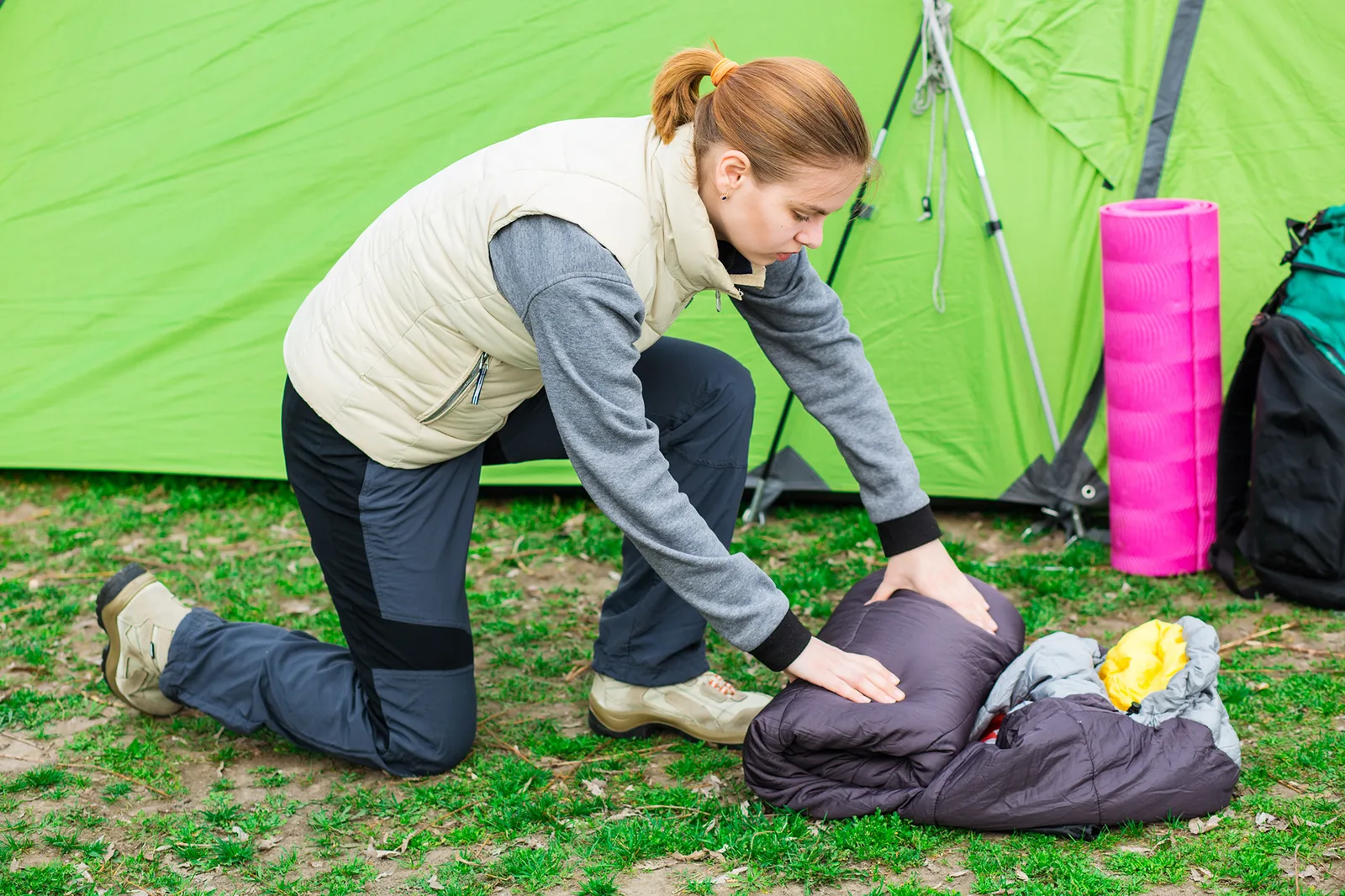
Store your sleeping bag in a cool dry area away from direct sunlight. The bag is best stored fluffed up. Many sleeping bags come with a large breathable storage bag us this otherwise a cloth bag like a pillow case of larger is ideal.